
The Federal Government has confirmed a case of Ebola disease in the Federal Capital Territory (FCT), Abuja, with 44 close contacts identified as authorities intensify efforts to prevent further spread of the infection.
The Minister of Health and Social Welfare, Prof. Muhammad Ali Pate, disclosed this in a statement on Tuesday, October 20, 2026, following laboratory confirmation of the case.
According to the statement, the patient is a woman who recently arrived in Nigeria on an international flight from Uganda. She was reportedly admitted to a private hospital in the FCT, where she received treatment for several days before the diagnosis was confirmed.
The woman is currently in isolation and receiving medical care.
The Federal Ministry of Health and Social Welfare, the Nigeria Centre for Disease Control and Prevention (NCDC), and the FCT Health Services Secretariat are collaborating with relevant authorities to contain the infection and prevent further transmission.
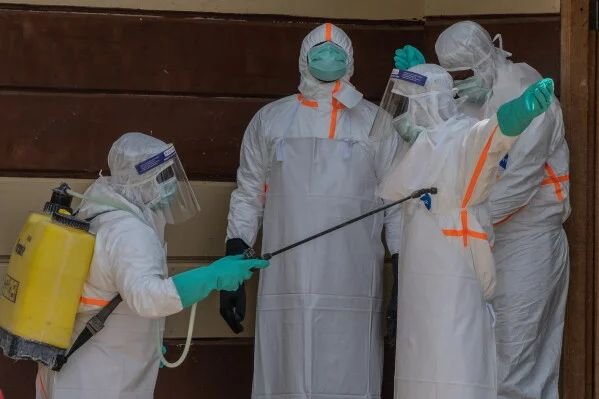
The government said public health teams had commenced contact tracing and were working to identify and monitor everyone who might have been exposed to the virus, including healthcare workers, patients, caregivers and travel contacts.
It added that surveillance had been intensified, while the hospital where the patient was treated was receiving support to strengthen infection prevention and control measures.
The government urged public and private healthcare facilities nationwide to remain vigilant and promptly identify, isolate and report suspected cases.
Healthcare workers were also advised to maintain a high index of suspicion and strictly adhere to infection prevention and control protocols.
Pate urged Nigerians to remain calm and observe preventive measures, including regular handwashing and avoiding contact with the blood and other body fluids of suspected Ebola patients.
He identified fever, severe weakness, headache, vomiting and diarrhoea as symptoms to watch for, particularly among people who might have been exposed to the virus.
The statement advised anyone developing symptoms to avoid close contact with others and contact public health authorities for guidance before visiting a healthcare facility.
The government also appealed to individuals contacted by public health teams during the tracing exercise, including potentially exposed airline passengers, to provide the necessary information and comply with official instructions.
The development comes amid concerns about the regional spread of Ebola. Nigeria’s disease control agency had, in an October 6 advisory, warned of the risk of importing the infection following a confirmed case in Kenya linked to an outbreak in the Democratic Republic of the Congo.
The World Health Organisation (WHO) says Ebola spreads through direct contact with the blood or other body fluids of infected people and contaminated objects or surfaces. Infected people do not transmit the virus before symptoms develop, while the incubation period ranges from two to 21 days.
Nigeria contained an Ebola outbreak in 2014 after an infected traveller introduced the virus into the country. The response involved rapid case identification, isolation, contact tracing and coordinated public health interventions.
Pate expressed confidence in Nigeria’s capacity to respond to the current case, citing the country’s experience and public health systems. He, however, stressed that public cooperation would be critical to preventing further transmission.

The Federal Government said investigations were ongoing, adding that the Presidential Task Force on Ebola Virus Disease and the NCDC would continue to provide updates.
Members of the public can contact the NCDC’s toll-free call centre on 6232, available 24 hours a day, for information or to report suspected cases.

